By Rev. Paul Brandeis Raushenbush, president and CEO of Interfaith Alliance and Amelia N. Aldred, deputy director of state and local advocacy at the American Library Association
Launching Faith for Libraries: Hundreds Gather in Solidarity
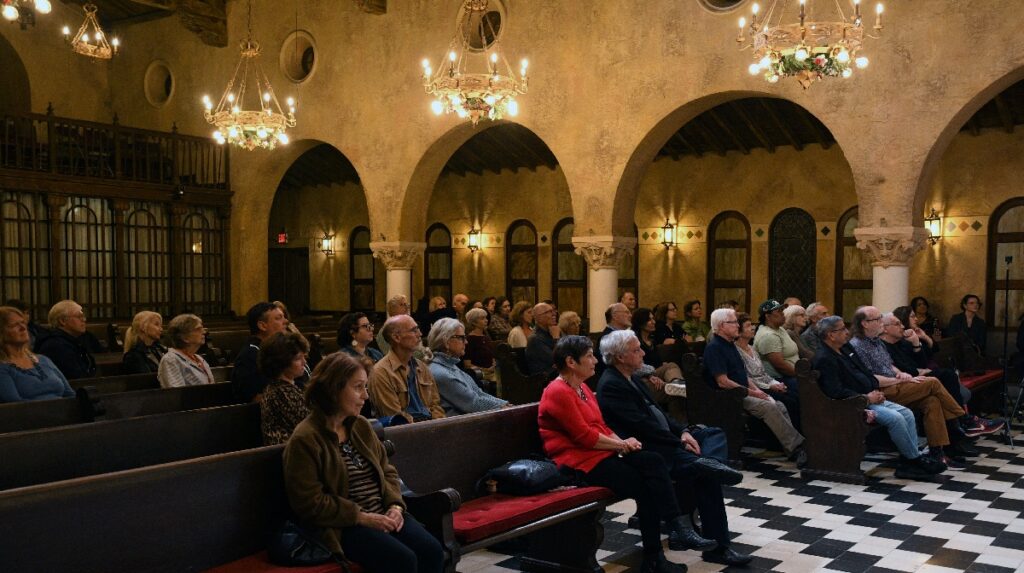
On November 5, 2025, the Interfaith Alliance, the American Library Association, and Unite Against Book Bans launched “Faith for Libraries: Diverse Faith Communities Supporting Libraries and Librarians” with a free webinar titled “How Faith Communities and Librarians Can Advocate for the Freedom to Read.”
Now available on YouTube, the event drew 600+ attendees. They gathered to hear how book bans threaten religious freedom, bear witness to ways that coordinated censorship attempts have impacted librarians’ lives, and explore new ways for faith communities and library workers to come together in defense of the right to read.
Faith and Advocacy in Rural Idaho
Sherry Scheline, President-Elect of the Association for Rural and Small Libraries, delivered a powerful presentation about her role as director of the Donnelly Public Library District in Idaho. A fourth-generation Christian and daughter of a Pentecostal minister, she resides in her great-grandfather’s home and leads the community library. Scheline described the impact of Idaho’s HB 710, which disproportionately harms small libraries unable to separate children’s and adult materials. Her faith-informed efforts to support LGBTQ and BIPOC youth at the library—essential in a town without a theater, community center, or hospital—have been misrepresented by the bill’s proponents as “pushing pornography.” Scheline stressed the emotional pain of having her identity as a Christian librarian who loves America unjustly attacked by pro-censorship forces that portray librarians as enemies of both church and state. She urged librarians of all faith traditions to embrace and share how their religious beliefs inform their work.
Building the Episcopal Church’s Beloved Community
Rev. Qiana Johnson, Associate Dean of Libraries, Collections and Content Strategies at Dartmouth Libraries, also spoke about the intersection of her faith and profession. As bans disproportionately target books by and about Black experience and history, she was inspired to work with the Union of Black Episcopalians to develop a resolution — Condemning Censorship—which was passed by the Episcopal Church in 2024. Rev. Johnson spoke passionately about how the exclusion of stories by and about marginalized communities runs contrary to the values of the Episcopal Church, which embraces all of its members. She offered practical advice for beginning conversations that could lead to similar statements of support from other faith traditions and houses of worship.
Our Ongoing Work Together
On behalf of the Interfaith Alliance and ALA, we look forward to sharing more about Faith for Libraries and our work together in the new year. In the meantime, here are a few ways to take action now:
- Sign the People of Faith Pledge to Support Libraries, which affirms your belief in the sacred worth of knowledge and the freedom to learn.
- Use our resource, Banned Books, Banned Beliefs, as a tool to begin outreach efforts in your community. Library professionals can use the print-ready brochure to start conversations with local faith groups; faith communities will find practical ideas for taking action in support of the freedom to read.
- Listen to Libraries and Religious Freedom and Book Bans vs. the Right to Read, on The State of Belief weekly podcast.
Interfaith Alliance was founded 30 years ago to help uphold religious freedom, civil rights and healthy boundaries between government and religion, and to push back against those who sought to falsely claim the mantle of religion as an excuse to dictate to others how to pray, how to love, how to live our lives. The American Library Association works every day to ensure equitable access to information for all. This is a moment when we cannot stand by. Through Faith for Libraries, we call on our diverse communities to show up — for libraries, librarians, religious freedom, the freedom to read, and for our democracy.