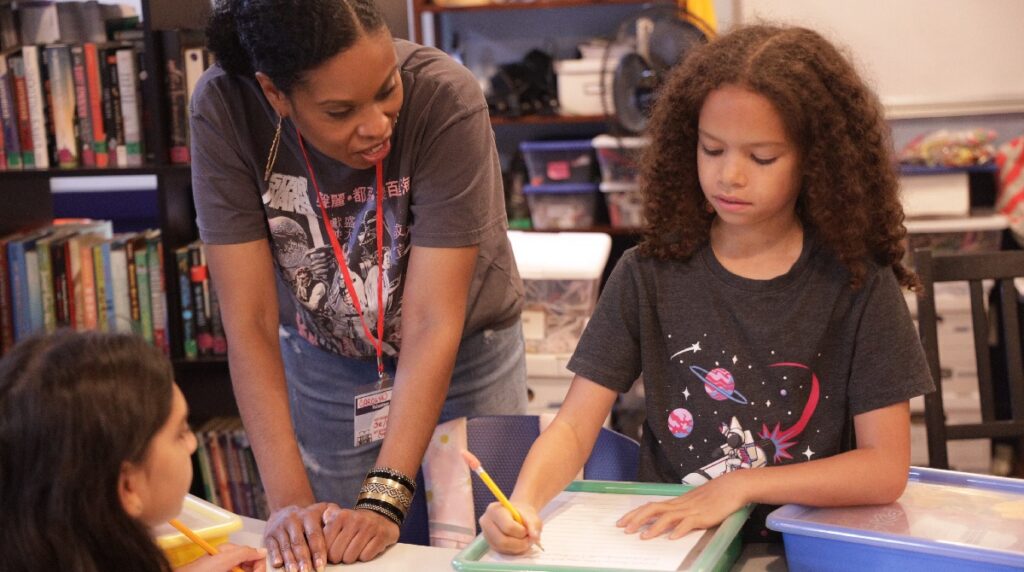
Photo (above) provided by 826NYC.
This blog post is by Laura Brief, CEO of 826 National Youth Writing, a Unite Against Book Bans partner.
For over twenty years, 826 National has supported young people in reclaiming their authentic voice. In classrooms and community spaces across the country, students have written stories rooted in their life experience and identity. They have authored literature in multiple languages, transcending borders while painting a mosaic of the vast world we live in.
Students have learned that their words matter.
But recently, something has changed.
The Freedom of Expression for Young Writers Is Evolving
More often, students in and out of our classrooms are not only asking, “Can I share this?” but also, “Is it safe to speak?” 826 acknowledges that every author —young and old—is experiencing hesitation when putting pen to page, and this begs the question: What does it mean to write in 2026, especially for young writers?
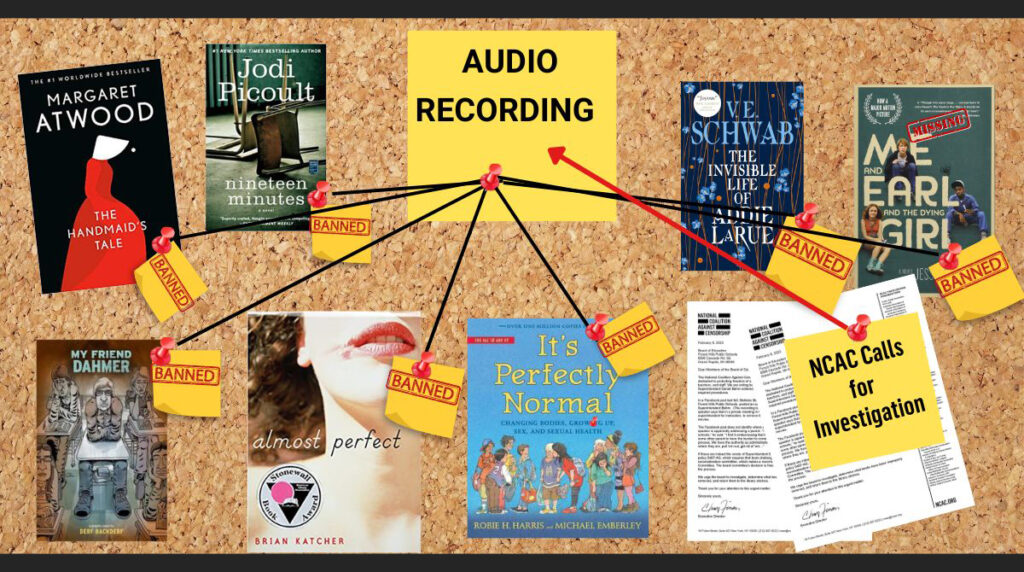
This question cannot be separated from the surge of book banning efforts across our nation. In the last few weeks, the first federal book ban bill, H.R. 7661 was put before Congress. It imitates state-level bills created to restrict the freedom to read by using a vague, broad definition of “sexually oriented” intended to discriminate against LGBTQ+ students. This has caused chaos, confusion, fear, and costly, ongoing lawsuits. These bills are attempts to give politicians broad authority to decide whose stories are allowed on our shelves and in our classrooms.
Removing Stories and Silencing Authors
The message of H.R. 7661 is clear: The right to read about characters representing diverse racial, gender, and ethnic identities in literature is under threat. Across the country, books featuring characters who look like our students or who speak honestly about lived experience are being removed from classrooms and libraries. 826 National joins United Against Book Bans and the American Library Association in vocal opposition to these efforts.
According to the latest PEN America report, “Banned in the USA: The Normalization of Book Banning,” there were 6,870 instances of book bans during the 2024–2025 school year spanning 23 states. These bans send a message. When stories are labeled dangerous, young people internalize that message, wondering whether they can share their own story, if it is safe to share who they are.
The Fight for Young Authors is the Fight for Democracy
The hesitation our young authors are feeling reveals deeper problems in our culture. Healthy democracy relies on citizens owning their ideas, arguing in good faith, and participating visibly in public life. These habits are learned early through the simple and powerful act of saying: I wrote this.
One 826 student captured this truth perfectly: “I write for my rights. I write for peace and freedom.” This reminds us that writing is not just an academic skill, but a civic one.
If claiming authorship—putting your name on your own words—has long been a source of pride, what does its loss signal about the world young writers are inheriting?
At 826 National, we believe young people deserve more than permission to write—they deserve the freedom to stand behind their words. When young people feel safe enough to sign their names, they are not just authoring stories. They are practicing democracy.