

Every victory for the freedom to read begins with a courageous community of advocates. Whether you show up to a school board meeting, report censorship, donate or take other actions, you are part of a powerful movement to protect the right to read. In our Freedom to Read Advocate Spotlight series, we celebrate our advocates by sharing their stories, motivations, and what drives them to fight against censorship.
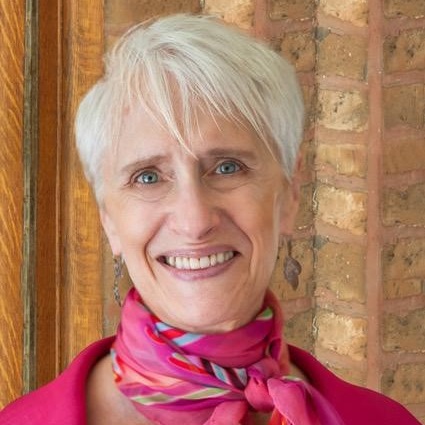
“I came to understand decades ago that the person who controls speech is the person who controls everything else in society,” says Sara Paretsky, the trailblazing author and passionate advocate for the freedom to read. A longtime supporter and donor to Unite Against Book Bans, Paretsky believes that the right to speak—and to be heard—is the foundation of a free society. “Speech is that fundamental,” she emphasizes.
From Crime Fiction to Social Action: A Commitment to Advocacy
Paretsky has spent her life amplifying voices that are too often ignored. Through her writing and activism, she has championed the stories of people marginalized by society. In 1982, she transformed the mystery genre with the debut of V.I. Warshawski, a fiercely independent private investigator from a working-class Chicago neighborhood. At a time when women in crime fiction were typically portrayed as either vamps or victims, V.I. stood apart. Her arrival coincided with real-world milestones: 1982 was the first year women were allowed to serve as Chicago police officers and the year before Sandra Day O’Connor became the first woman appointed to the U.S. Supreme Court.
Paretsky’s commitment to justice extends far beyond her novels. She is a vocal critic of censorship, an advocate for mental health care for the homeless, a defender of reproductive rights, and a supporter of LGBTQ+ youth. She also founded Sisters in Crime, a global organization that supports equity and inclusion in crime fiction writing and publishing.
Early Inspiration and the Ongoing Fight for Representation
When asked what inspired her to become an advocate for the freedom to read, Paretsky recalls a powerful moment early in her career. After a book reading, a group of ten women approached her. They were the wives of unemployed steel workers from South Chicago—the neighborhood of Paretsky’s fictional investigator V.I. They told Paretsky that they had never imagined someone would write about their neighborhood. Despite their financial struggles, they had pooled their resources to buy her book. “They said that my character, my voice, gave them courage,” Paretsky remembers. “Every time I doubt myself, I think of those women. No one was listening to them, but through my books, they felt heard.”
Today, she sees a similar silencing happening to LGBTQIA+ youth. “These book bans are forcing children to hide who they are,” she says. “It’s deeply damaging and often leads to self-harm. We’re hurting so many kids.”
To those who claim book bans protect children or uphold parental rights, Paretsky responds firmly: “There is no one whose judgment I trust more than my own about what is suitable for my child. Handing that authority to a stranger—especially a political figure—is giving away your power.”
A Call to Action: Stand Together and Speak Out
Her advice to those alarmed by rising censorship? “Support each other. Even two people working together can make a difference. Keep showing up. As my friend, the political organizer Terry Cosgrove, says, ‘There will be an opportunity for change. If we’re not doing what we can every day, we’ll miss it.’ I’m just one small voice—but together, our voices can be powerful.”
Join the fight for the freedom to read! Donate, connect with our passionate community of supporters, and equip yourself with our grassroots organizing toolkit.