This blog post is by Amelia N. Aldred, Deputy Director, State and Local Advocacy at the American Library Association.
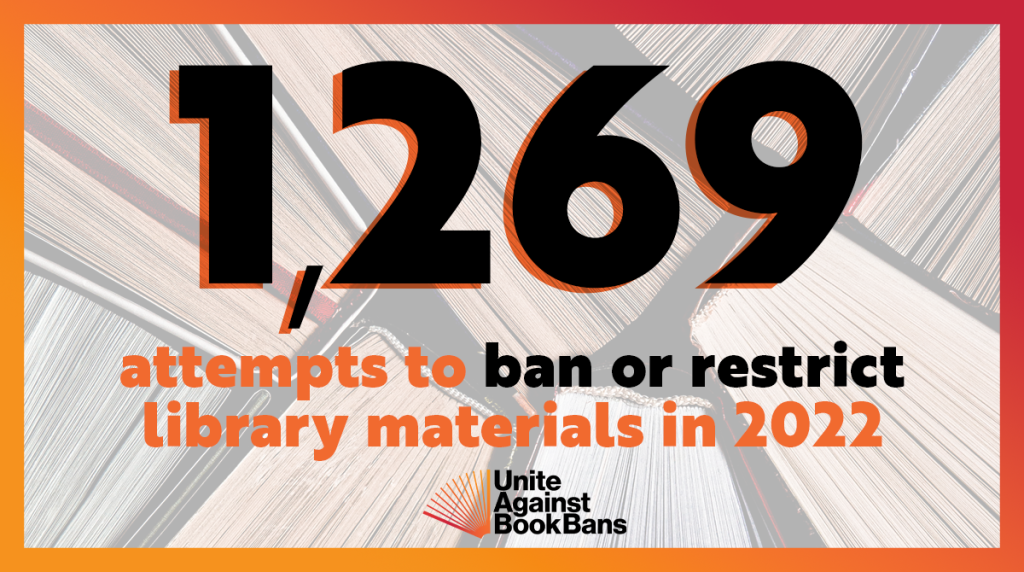
In 2020, well-funded political groups began a nationwide campaign to foment attacks on libraries, library workers, and the freedom to read. These attacks have continued unabated. In 2025, the American Library Association’s (ALA) Office for Intellectual Freedom tracked 4,235 unique titles challenged. This was the second highest ever documented by ALA, falling just behind the record set in 2023.
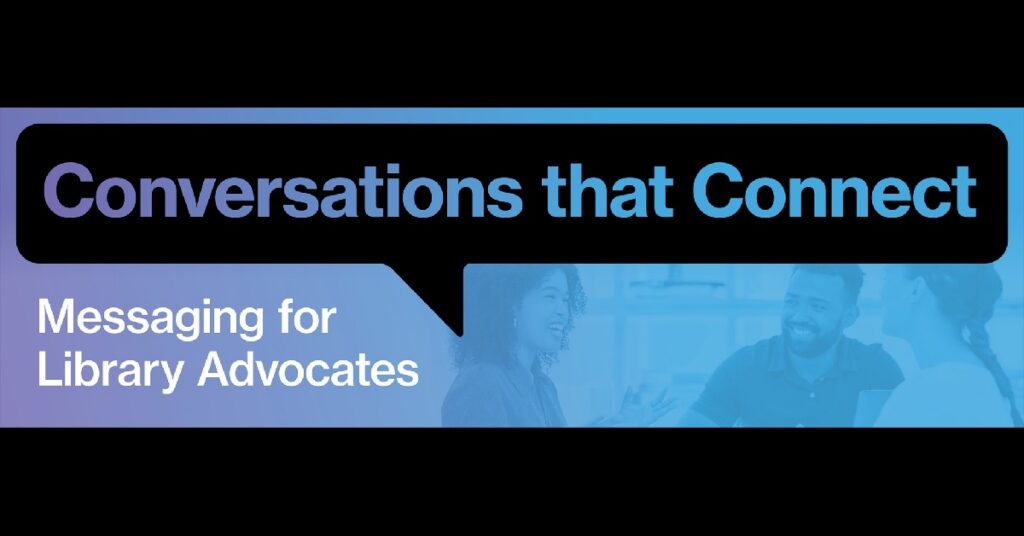
To combat the explosion of book banning in the U.S., ALA created the Unite Against Book Bans Action Toolkit in 2021. Five years later, pro-censorship groups continue promoting false information about libraries to generate outrage. However, the legal and advocacy landscapes have evolved. In response, ALA created Conversations That Connect: A New Messaging Guide for Library Advocates.
Why Do We Need Conversations That Connect?
The forces promoting book bans distribute disinformation to create rigid conversations and narratives about libraries, librarians, and censorship. Conversations That Connect was created to help library advocates lead more respectful, nuanced, and rational discussions about these topics. By reframing the discourse about libraries, library workers, and the freedom to read, advocates can mobilize existing supporters, engage new advocates, and even shift thinking among those in the “movable middle.”
What’s In The New Messaging Guide?
Conversations That Connect is an advocate’s tool to spark meaningful dialogue, connect to shared values, and position others to support libraries. The guide includes:
- Talking points and tips to spark personal conversations about the foundational American value of libraries and the freedom to read.
- Expanded messaging for four key topics— libraries, librarians, artificial intelligence, and censorship—using focus-group tested language to guide deeper conversations and inspire positive action.
- Five ideas for follow-up action, to engage and mobilize new supporters.
How Can I Use The Guide to Fight Book Bans?
Conversations That Connect was created for use by anyone who cares about libraries and the freedom to read. The guide’s focus group-tested messages are intended to work with any audience. A few ways to use the guide include:
- Starting one-on-one conversations to inspire deeper thinking on a politically polarizing topic, address common concerns and misconceptions, and identify shared values.
- Preparing for media interviews by becoming familiar with talking points that are informative and relatable to a broad audience.
- Communicating with local decision makers, like library and school board members, town council members, or state legislators.
- Creating positive social media campaigns.
- Writing op-eds or letters to the editor of local news publications.
How Did ALA Develop The New Guide?
To create Conversations That Connect, ALA incorporated feedback from its member leaders— including those involved with intellectual freedom and library advocacy committees —and worked with researchers to conduct a national focus group study. Focus group participants were selected from both urban and rural communities in Arizona, Florida, Missouri, Ohio, and Texas. The group was demographically diverse by race, gender, education, and political perspective. Most members were parents or grandparents of school-age children.
During four days of conversation with focus group members, researchers tested and revised messages, analyzing emotional responses, motivations, and shifts in opinion. The result is a guide that provides messaging with the greatest potential to resonate with people across regions and political viewpoints.
Why Is It Important to Advocate for Libraries and the Freedom to Read?
Our country was founded on the principle that people are free to think for themselves. Groups that claim to protect our liberty by banning books are actually limiting our freedom. No politician, government official, individual, or group has the right to choose what the whole community can read or limit access to books and information because they don’t like them.
We all deserve the freedom to read and think freely. Library professionals fight to protect these freedoms every day, which is why we must protect our libraries.